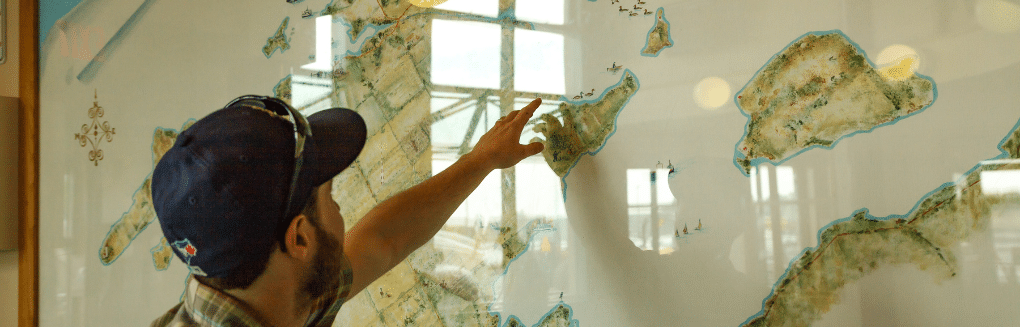
Planning a visit to Wolfe Island begins with the journey itself. Located at the eastern end of Lake Ontario, Wolfe Island is accessed by ferry and offers a slower, more relaxed pace once you arrive. Before setting out, visitors are encouraged to confirm ferry schedules directly through the official operator, as service times may change. Once on the island, you will find a range of places to stay, eat, and explore—from shoreline cottages and local dining to cycling routes, beaches, and quiet country roads—making it easy to plan a visit that suits your interests and the time you have available.
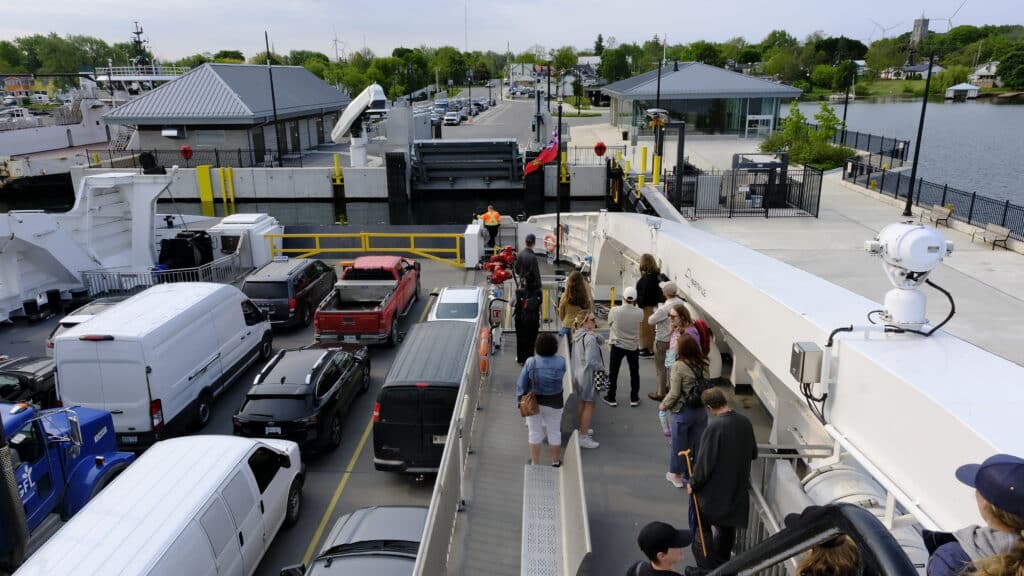
The Wolfe Islander ferry from Kingston is free for all passengers travelling by foot, bicycle or motorized vehicle. Please visit the MTO website for current schedule and service updates. The Wolfe Island Ferry is busy during the summer months, so please plan accordingly.
Public washrooms are located at the MTO Ferry Terminals.
Please visit MTO website for docking location updates. For additional updates on Wolfe Island Ferry Service or docking locations, please consult @WolfeIslander3 on Twitter/X or send an email to mtoferryinfo@ontario.ca to be added to the Wolfe Island Ferry email distribution list.
For Wolfe Island Ferry Schedule updates and docking location, please visit the MTO website.
The Wolfe Island Ferry Office phone number is 613-548-7227.
Tips for visitors planning to drive on the Wolfe Island Ferry:
- Avoid peak traffic. Weekends are always busy, it’s best to travel during the week. If you go Monday to Friday, try to avoid the ferry between 6:30am – 9:30am and 3pm – 7pm.
- Avoid taking multiple vehicles on the ferry.
- Arrive early for your preferred ferry and be prepared to wait in/near your car.
- When you get to the dock, get in line by pulling into the next available spot.
- Pull all the way up to the front of your spot to ensure all spots and all lanes can be filled.
- Ensure you are in your vehicle and ready to receive direction from deckhands when boarding begins.
- Be patient and kind. The ferry dock is a busy place with lots of activity happening.
- Public washrooms are located at the MTO Ferry Terminals.
Tips for visitors who are planning to walk on the Wolfe Island Ferry:
- Familiarize yourself with the geography of the island.
- Most of the shops and places to eat are located in the Village of Marysville.
- There are some destinations and businesses outside of Marysville. If you’re an avid cyclists, you could rent a bike (or bring your own) to explore beyond the village.
- There are no taxis or public transportation options on the island.
- If you plan to walk on the ferry, you will need to wait in the pedestrian staging area (near the ferry ramp), and wait for the deckhand’s signal before you board. It’s best to wait until all pedestrians on the ferry have disembarked before you board.
- If ferry capacity is reached, pedestrians will be turned away for that crossing.
- Public washrooms are located at the MTO Ferry Terminals.
The Simcoe Island Ferry takes about 10 minutes to cross and it operates on demand.
Transient Fares: Cyclist – $2.00 per trip Single Car – $10.00 round trip Truck – $20.00 round trip
For more information on fares or operating schedules, please visit the Township of Frontenac Islands ferries page or call the Simcoe Island Ferry at 613-385-2997.
Horne’s Ferry, which has connected Wolfe Island, Ontario, and Cape Vincent, New York, for over two centuries, is currently non-operational as of early 2026.
The ferry service, which began in 1802 and was the only family-owned international crossing in North America, ceased operations in 2024 following the death of its longtime captain and owner, George Horne. For generations, the Horne family operated various vessels—ranging from rowboats and scows in the 1800s to the MV William Darrell, a 12-car diesel ferry built in 1952.