“Community always revolves around food,” says Kim Perry. “If you want to be around community, be around food.”
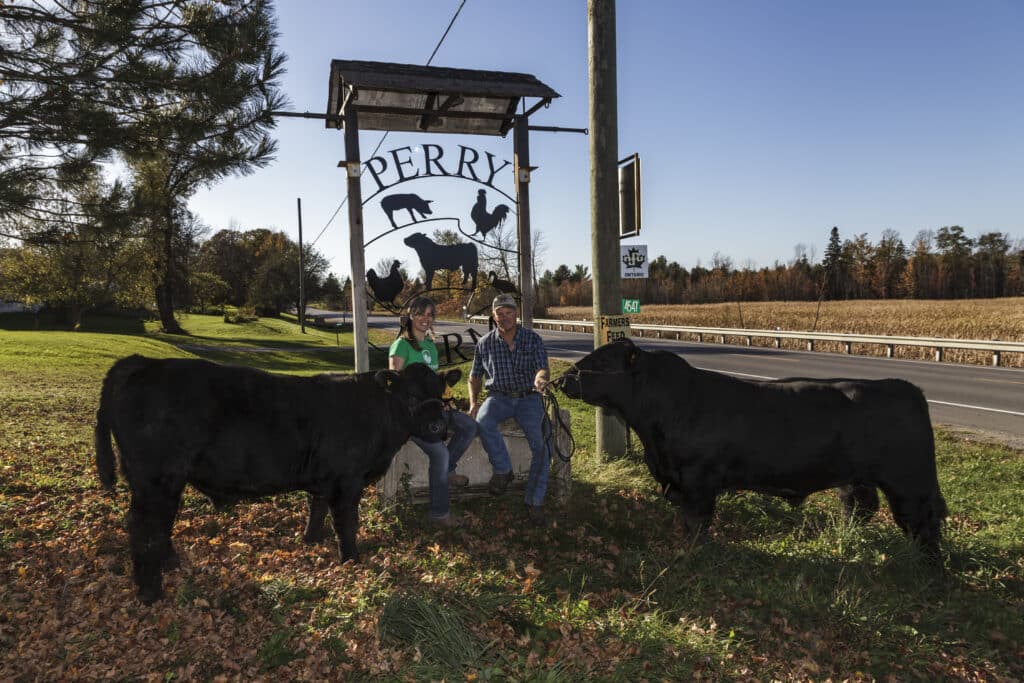
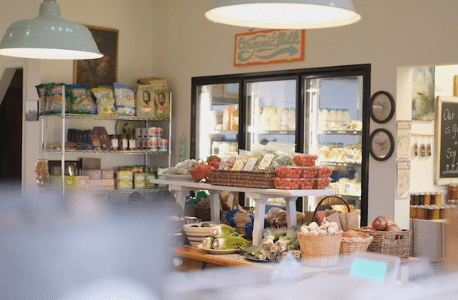
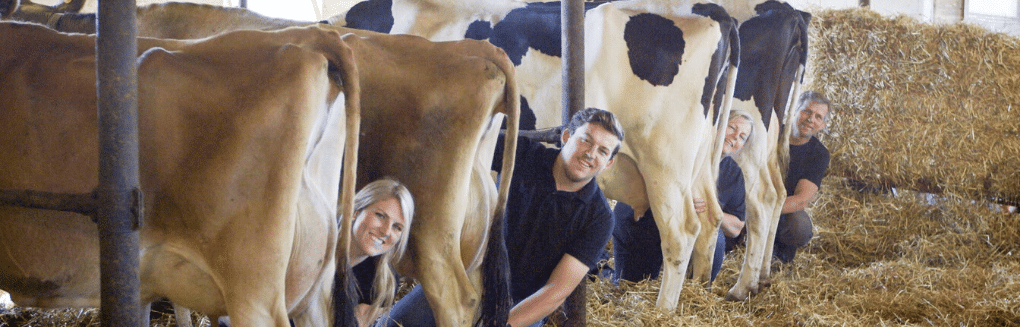
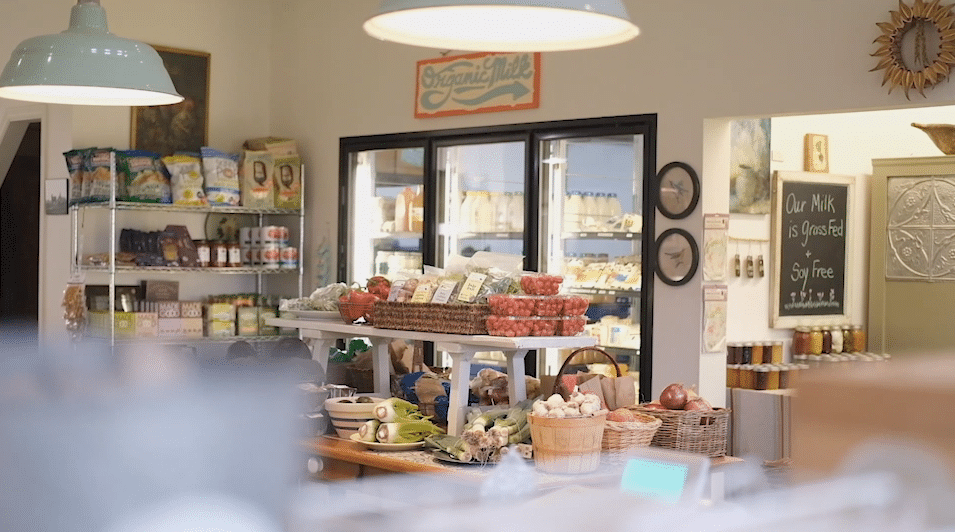
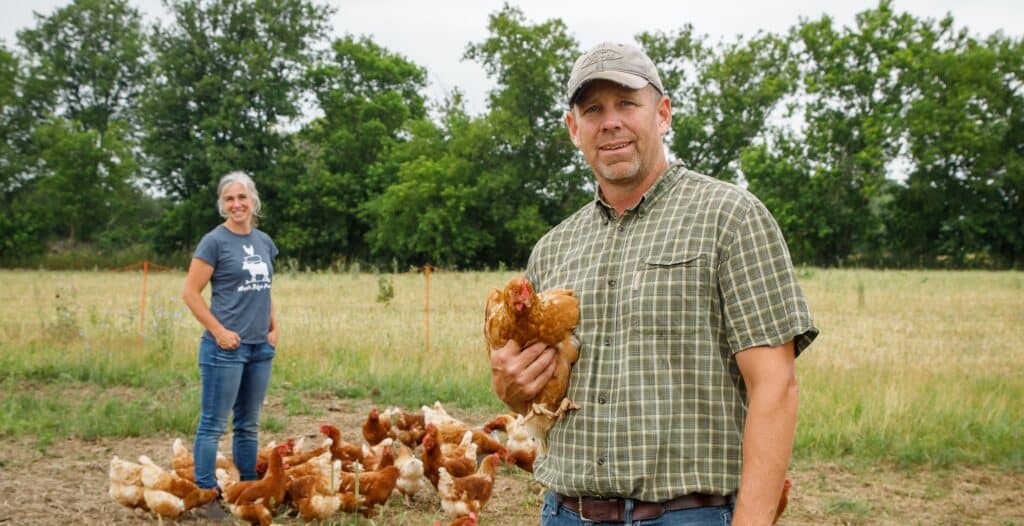
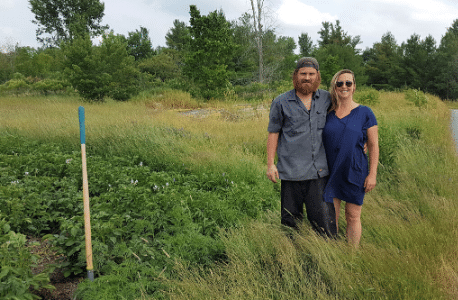
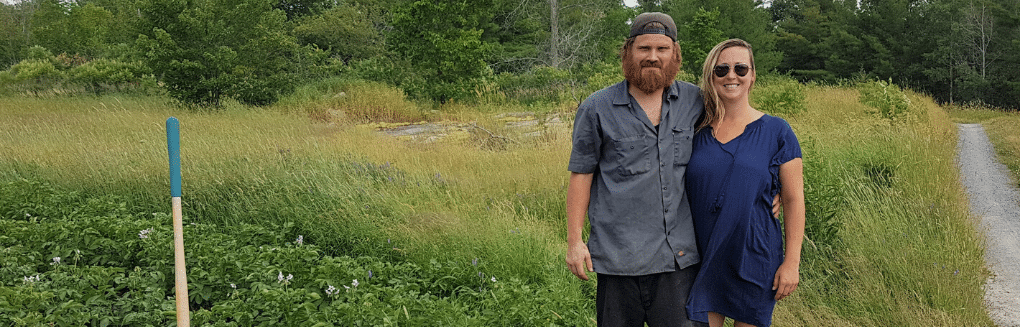
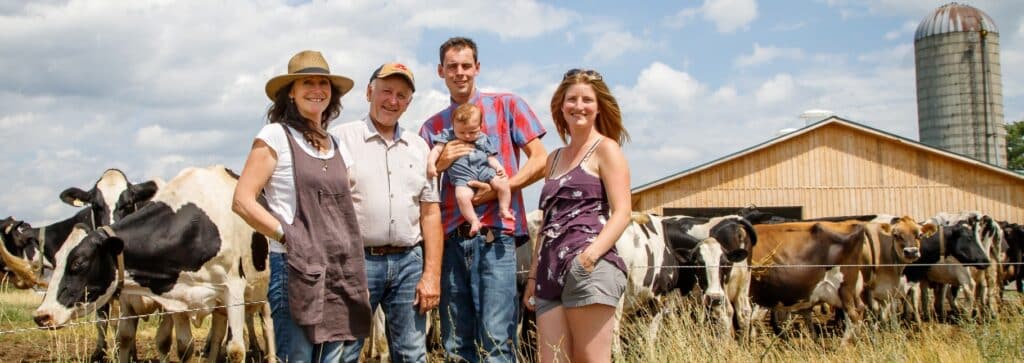
Kim and Dave Perry run both Perry Maine-Anjou farm and the Food Less Travelled store in Verona, South Frontenac.
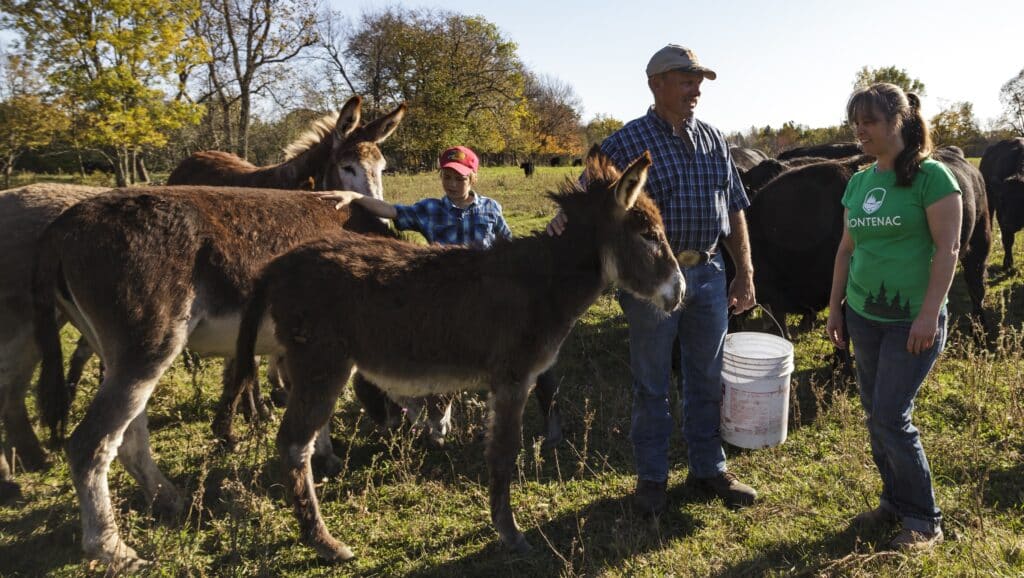
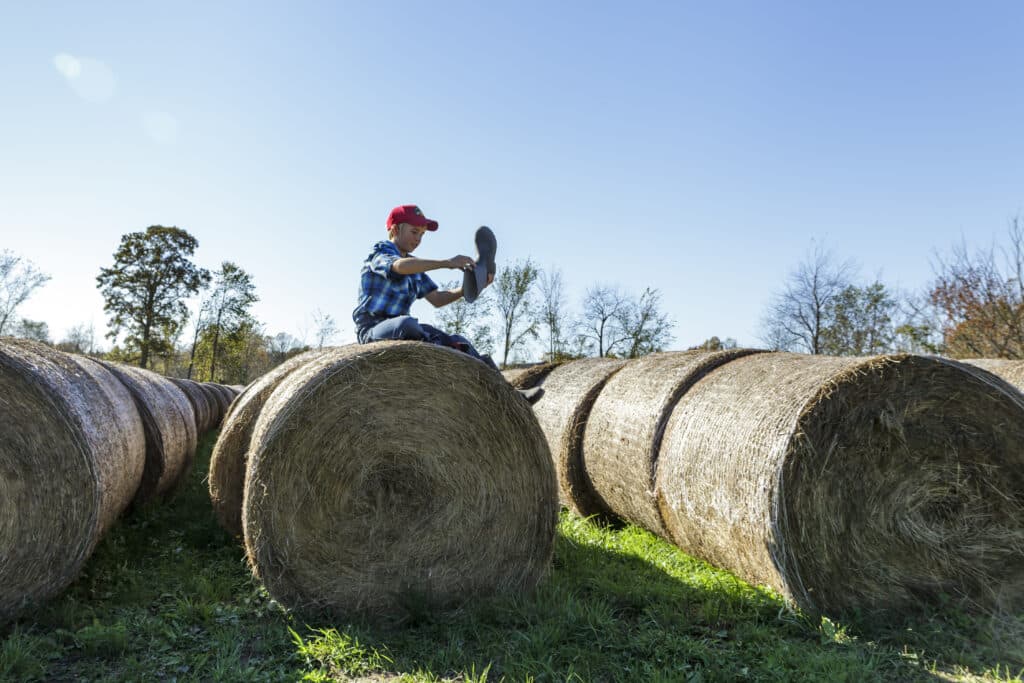
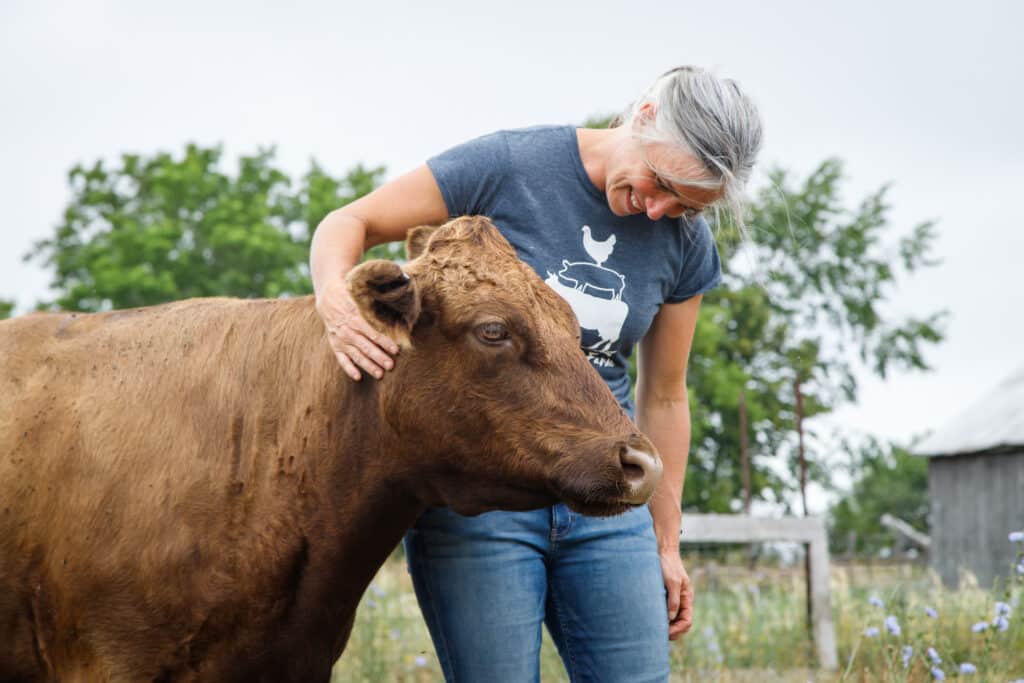
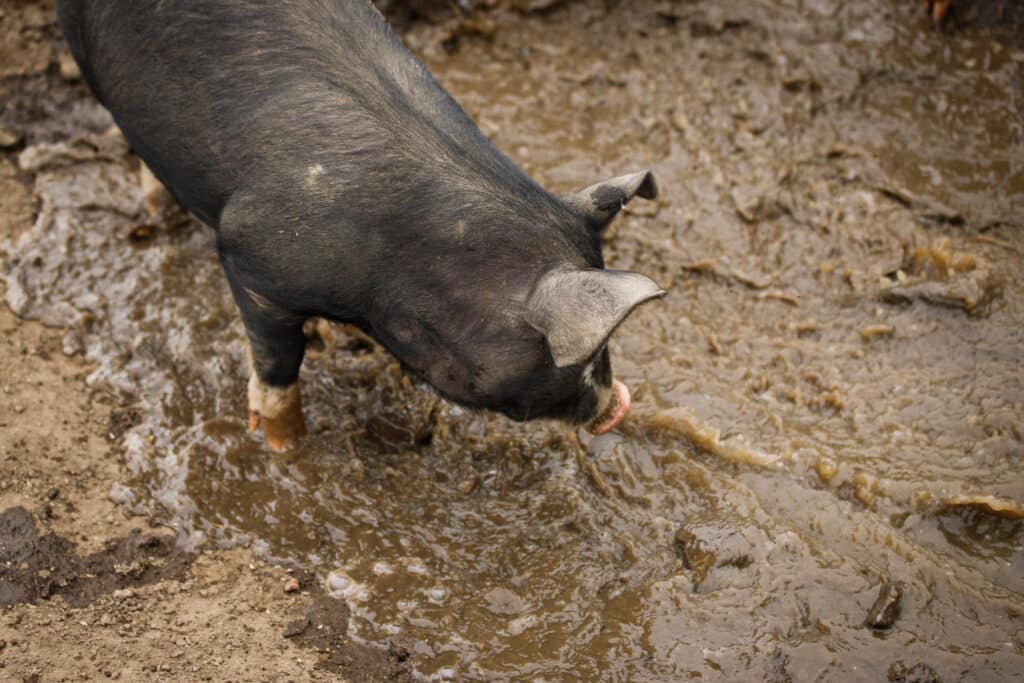
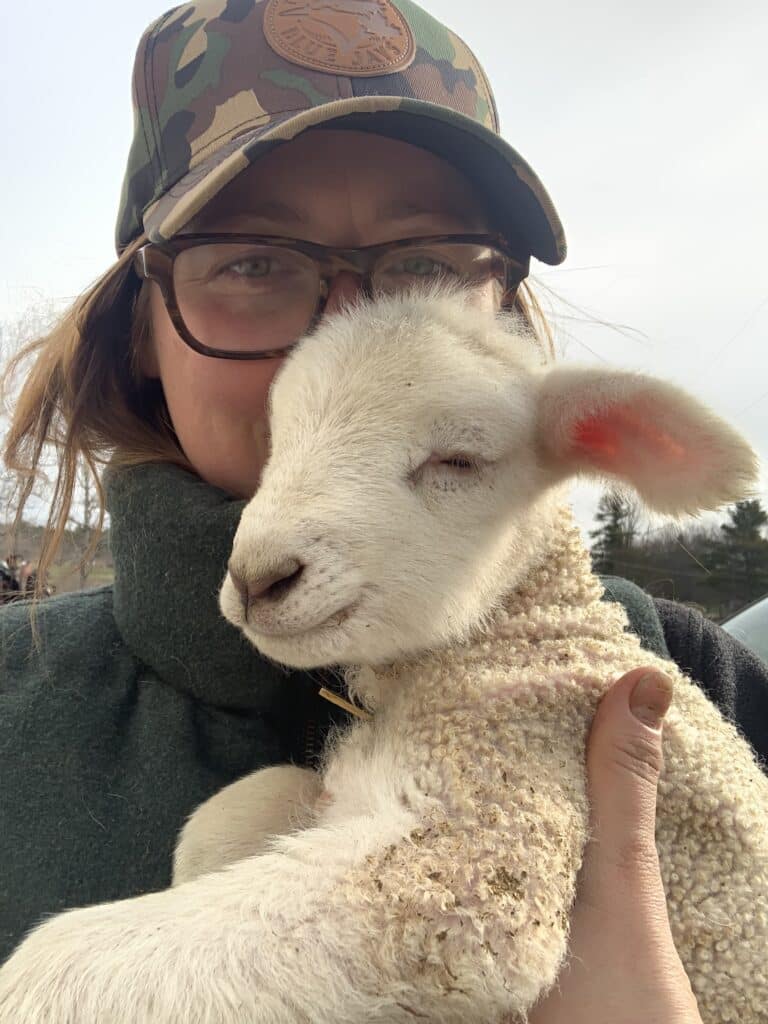
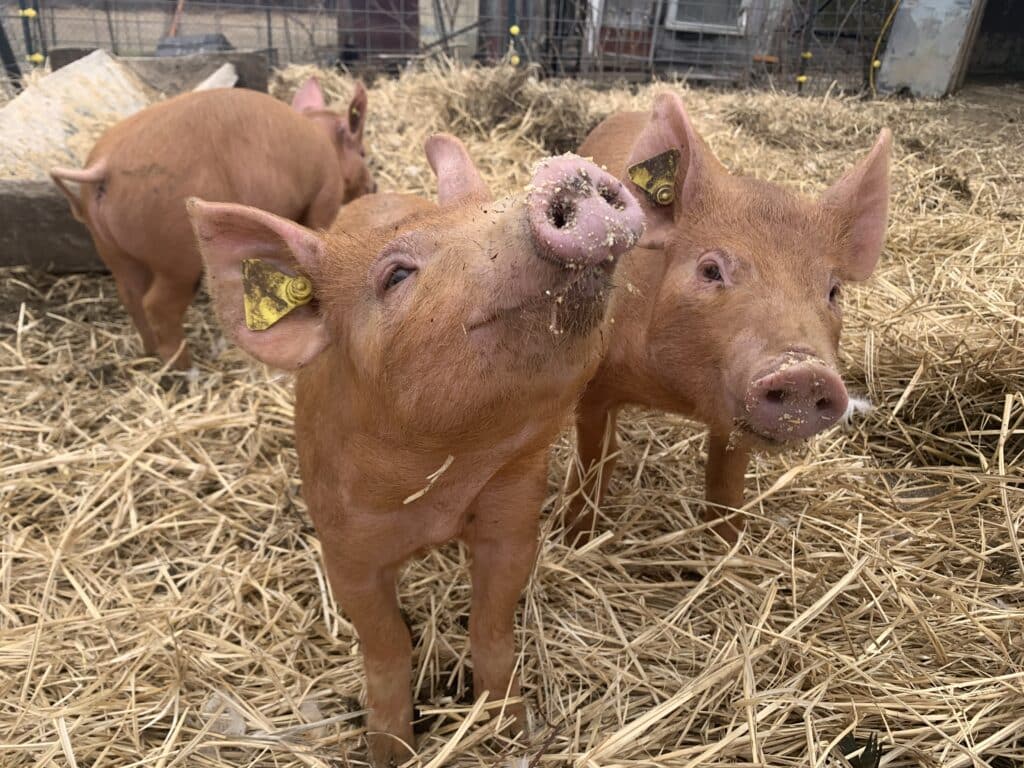
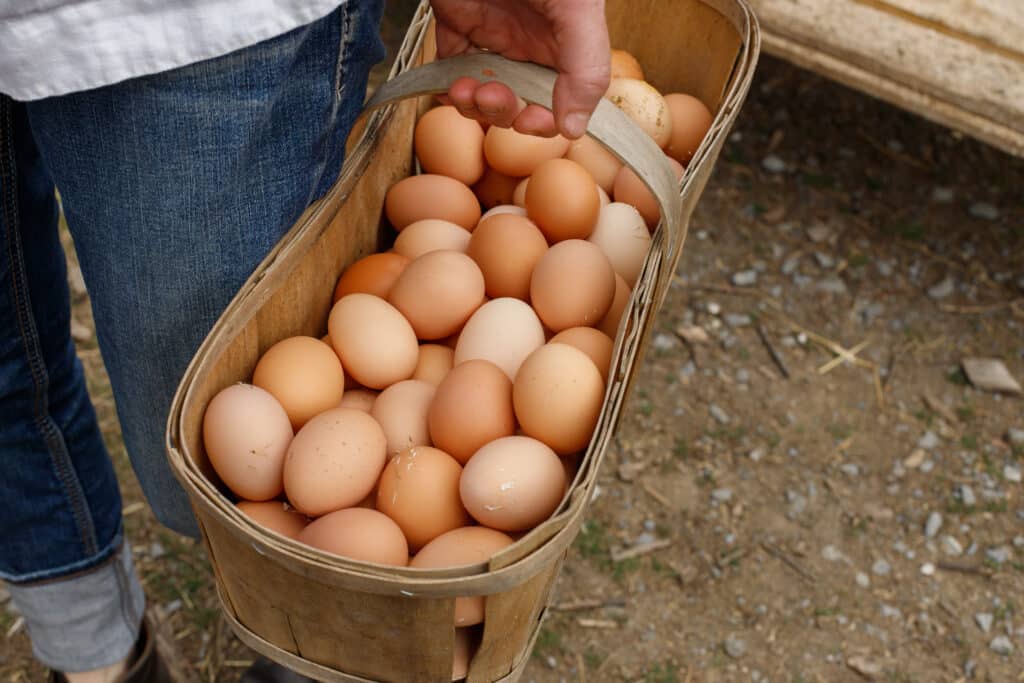
Their farm operates with the help of their kids, Justin, Jenna, Kaitlyn, Grant, and Mason. The family raises a variety of livestock including prize-winning Maine-Anjou cattle, Berkshire pigs, meat chickens, turkeys, laying hens, and Muscovy ducks. They have a handful of donkeys as guard animals against predators.
“We try to raise our animals as naturally as we can,” explains Dave. “We’re not organic, but we don’t use hormones.”
“The benefit of raising meat naturally is that you have control of where it’s processed, and how,” says Kim. “That animal starts with quality, and leaves the butcher with the same quality, so that people can eat quality food.”
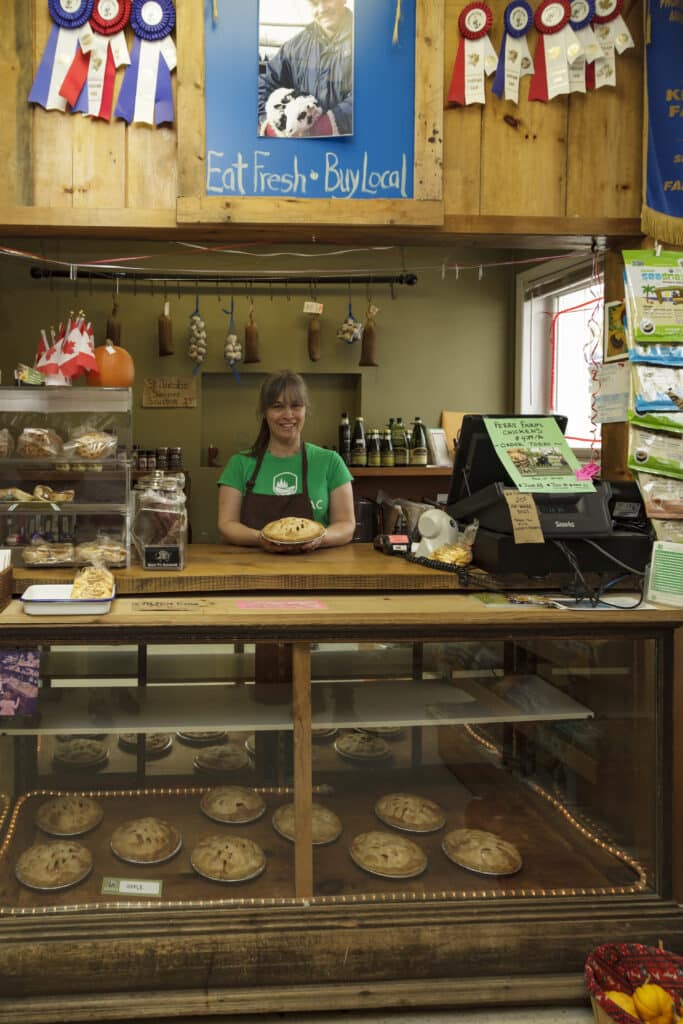
The best place to buy that quality food is their store, Food Less Travelled, which is now in its thirteenth year.
Food Less Travelled carries not only products from the Perry farm, but from local farmers across Frontenac County and the region.At their store, Kim makes meals and prepared food from all of their meats: tourtières with pork, shepherd’s pie with beef, chicken pot pie, and a pork and chicken “Canadian-Cajun jambalaya.” They also make a variety of soups like chicken noodle, split-pea and ham, and vegetable soups, as well as seasonal options like carrot-parsnip or potato-leek soups.
They choose carefully what foods to stock and sell at their store. “We try to stay as local as possible,” explains Kim. “Where it was grown is a priority, and then where it was processed. Whether it is organic, if possible, and whether it is from a family farm or a small family processor.”
“Local family farms,” Dave emphasizes, “as opposed to factory farms.”
“We have such a good, close-knit farming community,” says Kim, “right from South Frontenac to North Frontenac, we can pick up the phone and get anything we need.” It’s something tourists often mention, Kim observes: “When people come from out of town, they always comment on how lucky the people are in Frontenac County to have local food available to them.”
Dave and Kim both come from hard-working families. “I’ve been farming my whole life,” says Dave. “I remember milking cows by hand when I was six years old. Our kids are the seventh generation on this farm.”
Their work at the store is about more than making a living; it’s about nourishing their community.
“I really believe that communities should feed each other,” says Kim. “That might mean actual food, but also support—social support or emotional support.”
And because of their connections to people across the region, Food Less Travelled has become a community hub, as Kim explains. “People come to the store for everything from ‘where can I get a safety pin’ to ‘who’s the guy that can fix this equipment.’”
“I don’t care if you’re someone with a lot of money from a big city, or an elder who can’t shovel your driveway, or somebody who is sick but who usually looks after everybody else,” says Kim. “We all rely on each other.”
“Food builds community, and it builds trust,” Kim concludes. “It all goes hand in hand.
Where to find Food Less Travelled:
Along with meat from the Perry farm, many products from many local farms and processors can be found at the store, including:
“The passion for cooking keeps me coming back to the kitchen,” says master jam maker Robert Henderson. “My parents cooked a lot, we always tried new foods.”
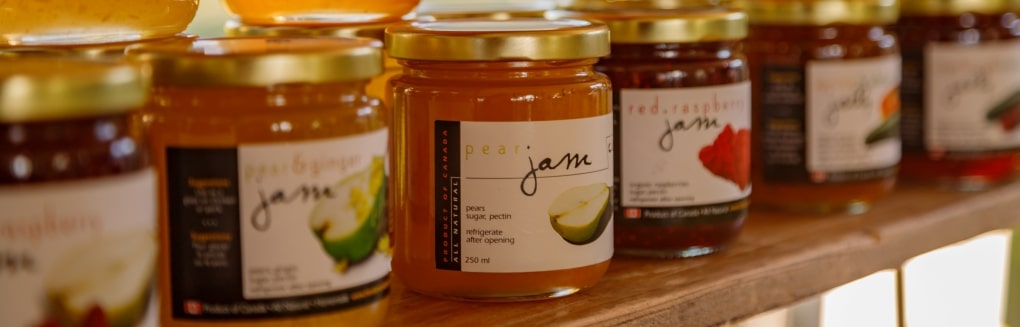
Along with family, Robert Henderson runs Henderson Farms on Wolfe Island; his farm’s speciality is their award-winning jellies and jams. “We have about 50 different types of jams, jellies, and marmalades.” Their repertoire includes traditional flavours like strawberry and blueberry jams, but also novel variations like peach & jalapeno jelly, wild dandelion wine jelly, and stinging nettle jelly.
Robert is the four-time Grand Champion Jam and Jelly Maker of the Royal Agricultural Winter Fair in Toronto. He has won dozens of other high-profile awards for his farm’s products.
Robert makes his award-winning products in a large commercial kitchen at his third-generation family farm. “It’s a family-run business,” he explains. The farm business includes Robert’s partner Norman Dupont, Robert’s siblings William and Nancy Henderson, and their mother Wilda Henderson, who oversees daily activities.
“I grew up on Wolfe Island, so it’s home,” says Robert. “It’s calm, it’s quiet. The farm is a beautiful setting along the St. Lawrence River.”
While Robert has won awards in many cities, he uses ingredients from local farms whenever possible. Henderson Farms uses chokecherries and elderberries from Wolfe Island. And the Henderson family grows their own rhubarb. “Fig rhubarb is my favourite jam,” says Robert. “But the pepper jellies are always quite popular.”
The Royal Agricultural Winter Fair in Toronto is where Robert tests his experimental flavours. “I’m always looking for a new recipe, a new product to try,” he says. “I look forward to travelling to the different craft shows and meeting new people.”
But most of Robert’s work is closer to home, and in recent summers the Henderson family has welcomed visitors to their farm for afternoon tea events. “It’s a traditional-style English Tea,” explains Robert. “So you have the three-tiered dish with the sandwiches on the bottom, the scones in the middle, and the desert on top. Served with fine bone china.”
“Each person gets their own teapot with a choice of three different teas,” adds Robert. “It’s in a setting on the island. You’re under a big tent, looking over the St. Lawrence River, so you can see the ships going by.” The experience is inspired by Robert’s visits to tea houses around the world in Belgium, England, France, Germany, Ireland, the Netherlands, Scotland, Chile, and Costa Rica, as well as here in Canada.
If you can’t make it to an afternoon English Tea at Henderson Farms, you can still find their delicious baked goods at the Kingston Public Market on Tuesdays, Thursdays, and Saturdays.
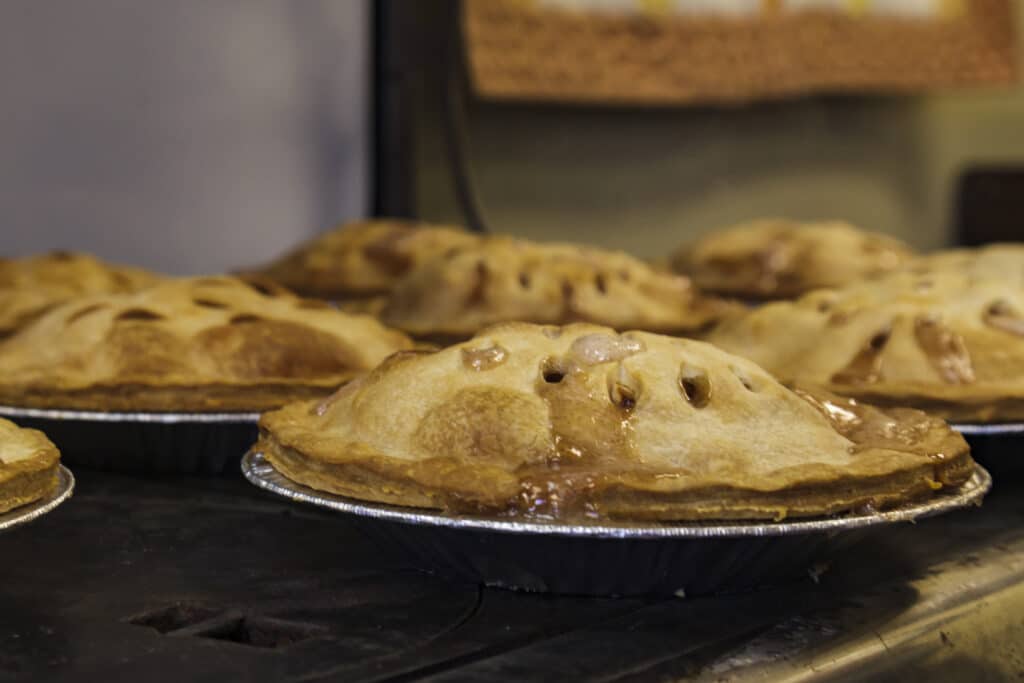
Their whole kitchen is nut-free and dairy-free, and they offer plenty of gluten-free baking options to choose from. Each fall they bake hundreds of additional fruit crisps and pies in time for the holidays. Their award-winning jams and innovative baking keep their market stand busy. “We have an amazing flourless chocolate beet cake,” says Robert. “And soft ginger cookies which people are just raving for.”
New On-Farm Store to Sell Local Products at Long Road Eco Farm
Story and Photo by Ava Waugh
Long Road Eco Farm is opening a new on-site store the weekend of Open Farms, September 10 and 11, 2022.
The goal of the store is to encourage visits to Long Road Eco Farm at 3757 Road 38, Harrowsmith, and also support local artisans and makers by offering products from other Frontenac businesses.
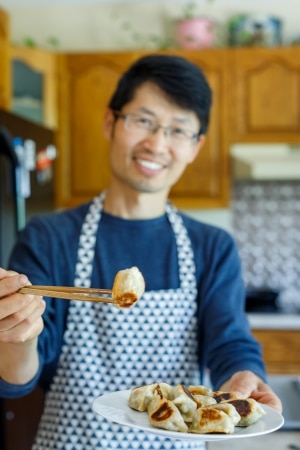
The store will be open seasonally Friday afternoon and all day Saturday, and will of course feature Long Road’s famous steam buns and dumplings, as well as extra produce from the farm such as garlic, onion, and other seasonal vegetables.
The project is a collaborative one, and as such they are looking for local artisans and makers, farmers and producers, to join them. As the store will open two days a week, Long Road is looking for non-perishables to sell, but all inquiries are welcome.
If you are interested in your products being sold at Long Road Eco Farm, email them at longroadecofarm@gmail.com.
The Story of Long Road Eco Farm
Story by Aric McBay Photos by Suzy Lamont
“It’s exciting when you see a new vegetable come into season,” says Jonathan Davies. “That’s a big motivation.”
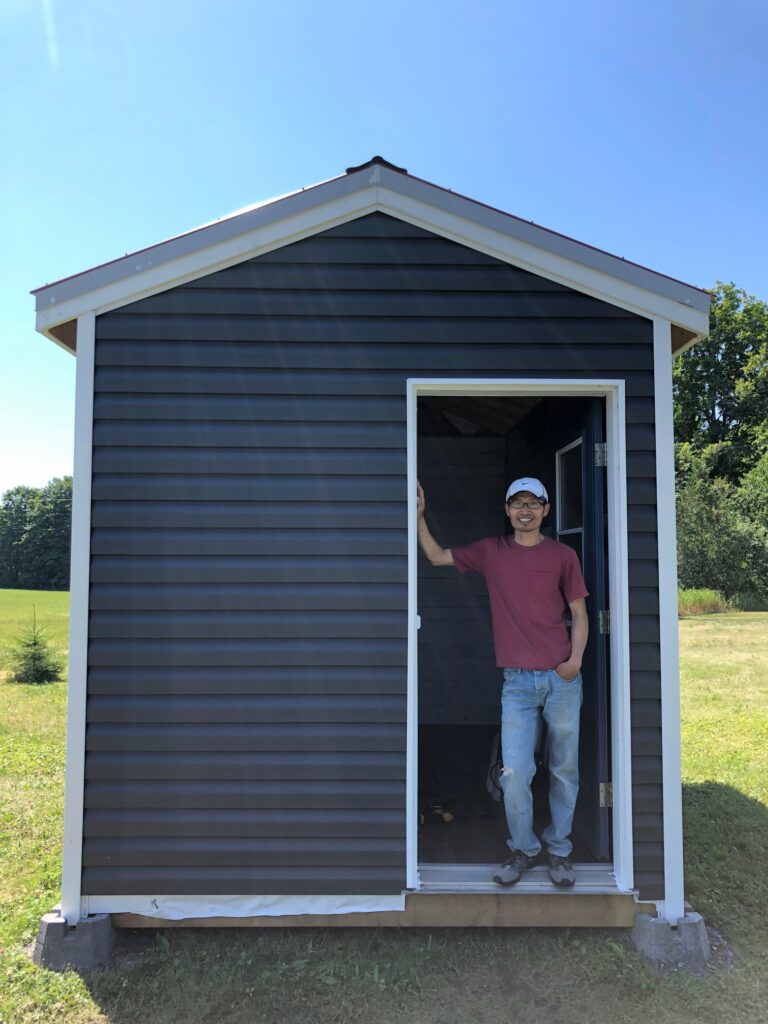
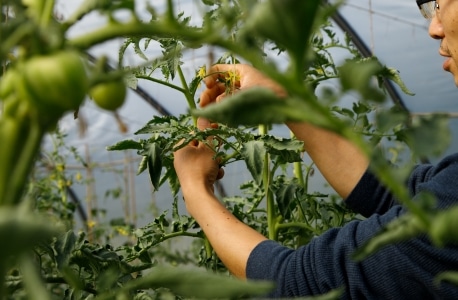
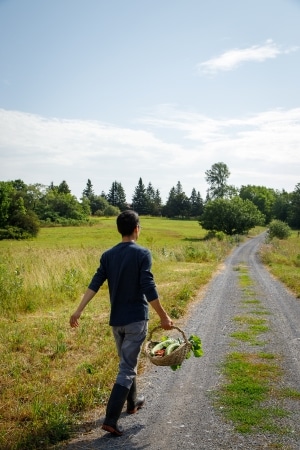
Xiaobing Shen and Jonathan Davies run Long Road Eco Farm, just north of Kingston on Highway 38. There they cultivate their gardens and raise chickens, ducks, and pigs.
At the centre of their farm operation are the Chinese peasant foods that Xiaobing prepares. He makes “farm sum,” including delicious steam buns filled with pork or vegetables, along with chili oil and fermented vegetables and tofu. The food is based on what Xiaobing ate growing up in rural China.
Neither Xiaobing nor Jonathan expected to become farmers. Jonathan grew up in Alberta, but not on a farm.
And when Xiaobing wanted to leave his Chinese village where he was born, his options were either to go to school or join the army. He chose school—and eventually moved to Canada to pursue a master’s degree in engineering, which is how he met Jonathan.
They were living in Toronto when they began to question whether a high-stress, high-speed lifestyle was something they wanted. So they started to learn more about farming. “We were trying to bring back some sustainability to our lives,” said Jonathan.
Xiaobing and Jonathan decided to buy a farm just north of Kingston and founded Long Road Eco Farm in 2013. Jonathan explains: “We saw other parts of Ontario, and some were affordable, but there wasn’t as much to draw us, like cultural opportunities and markets.”
“We had to figure things out pretty quickly. Looking back, it was kind of bold, there was an element of risk. But there was some kind of instinct: ‘we can do this.’ Whatever good or bad has come of it, it was a good decision. We’ve had some very rich experiences.” – Jonathan
Xiaobing recalls: “We wanted to be somewhere close to an urban centre, to get more out of life, not just the farm.” They also saw that Kingston had a strong local food movement, and other successful small farms. That choice has allowed them to enjoy a more balanced and varied lifestyle.
For Xiaobing, this includes time to make steamed buns, and to grow the ingredients. “Everyday, I mix some kitchen work with outdoor work,” says Xiaobing. “So not to spend the whole day only in the kitchen, or only doing outdoor work.”
They can also access the arts and culture that attracted them to the Kingston and Frontenac area in the first place. Sometimes they even host events, as Jonathan says. “We do some farm concerts or house concerts as a way of making it a social gathering spot.”
“Farming is a way to get in touch with simpler things. The pace of our style of farming is much slower than a large scale, fully commercial kind of farm. That’s something that both of us find important. I find there’s a lot of dignity in that kind of agriculture, even as just a part of your life. There’s a lot of resourcefulness involved.” – Jonathan
Strong community makes farming more fulfilling, Xiaobing explains. “The farmers’ market is a big part of my social life! Most days I stay at the farm, working alone. Meeting customers, that’s the most exciting day for me.”
“It’s very small-scale farming,” concludes Xiaobing. “There are different elements in the life, not just farming. We like to keep life interesting.”
You can also subscribe to a CSA share of vegetables in the summer, or prepared foods in the winter, by contacting Long Road Eco Farm at http://www.longroadecofarm.ca/.
Loughborough Heritage Apple Orchard
What’s Old is New Again
Story by Aric McBay Photos by Suzy Lamont
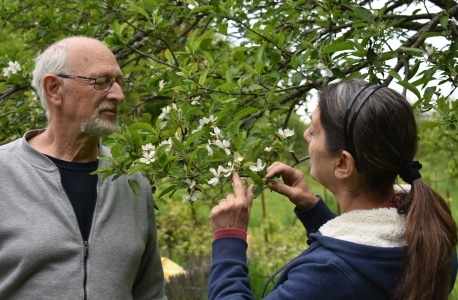
Stella and Marc Hiemstra run Loughborough Heritage Orchard, a beautiful farm nestled into the south shore of Loughborough Lake. Along with fruit trees they raise horses, pigs and chickens on their farm east of Inverary, in South Frontenac.
“Our focus is on maintaining heritage varieties, on a heritage property, in heritage ways,” explains Stella. The centrepiece of that heritage approach is the cultivation of “old standard” apple trees which are now 60-70 years old. Loughborough features 179 of these unique heritage trees, which grow about 30 feet tall (much taller than modern “dwarf” trees).
Growing old standards: In newer style orchards, apple varieties are grafted to dwarf root stock. This limits the overall size of the tree, but allows a new planting to come into production more quickly. That style produces dense rows of smaller trees. “A dwarf orchard would have over a thousand trees in the same space,” explains Stella, as their 179 heritage trees.
The lower density of the orchard means that there are broad, grassy spaces between the rows of apple trees. This is less demanding on the soil, making it easier to grow apples with organic methods, allowing space for the grazing animals that are critical to the orchard’s success.
“We really want this apple orchard to be spectacular,” says Stella. “To offer varieties you can’t taste anymore, to be able to provide that to our local community and beyond.”
Stella and Marc fell in love with the taste of heritage apple varieties after moving to the farm in 2014. “The flavours are remarkable,” says Marc. “It was like nothing we’d ever tasted.”
Since then, they’ve planted more young heritage variety apple trees, as well as pears, plums, and cherries. They make apple products right on the farm, including cider, jams, apple syrup, and apple cider vinegar. They also have a small sugar bush, where they produce maple syrup and maple butter, all available at the farm store when in season.
Along with the fruit and maple trees, Marc and Stella also raise animals. Their horses are part of the grazing rotation in the orchard. “Horse urine controls apple scab,” explains Stella. “It’s a natural fungicide.”
Their laying hens include heritage varieties like Barred Rocks, Rhode Island Reds, Australorps, and most recently Chanteclers, a breed that was developed a century ago in Quebec to tolerate harsh Canadian winters.
Marc and Stella also raise KuneKune pigs, a New Zealand heritage breed. KuneKune pigs are very cute, unusually small and round. Uniquely for pigs, the KuneKunes graze on the surface of a pasture instead of rooting in the soil. KuneKune pigs enjoy snuffling around in the grassy spaces between the apple trees.
But surprisingly for a farm that raises pigs, Stella and Marc don’t actually sell pork. In fact, they’ve never even eaten their KuneKune pigs. (“Apparently they’re very tasty,” notes Stella.)
The pigs are too important to eat because of their crucial ecological role in the orchard: cleaning up fallen fruit that could spread apple pests.
“One of the challenges with an organic orchard is that if little fruitlets fall to the ground and happen to have a bug larva in them, the larva will eat its way out, and go into the ground to pupate,” explains Stella. “It’s physically impossible to pick them all up.” If the apples are left on the ground, the pest cycle could continue the next year. Instead, the pigs devour the fruitlets whole.
Stella and Marc moved to Frontenac County from Bobcaygeon, after Marc retired from teaching, and they’ve found the area perfectly suited to their lifestyle. “We’re small town people,” says Stella. But the convenience of nearby Inverary, Sydenham, and Kingston is a perfect balance. “We have access to big amenities, but enjoy a small town feel where we can get to know our neighbours.”
Unique geology: The farm is at the boundary of Frontenac County’s limestone bedrock and Canadian Shield. A beautiful limestone escarpment runs next to the main orchard, but moment’s walk north will bring you to the ancient granite outcrops that overlook Loughborough Lake.
Where to find Loughborough Heritage Orchard products:
All Loughborough Heritage Orchard products are available through their farm store. The farm store is self-serve based on the honour system.
In addition to apple and maple products and free-range eggs, you might also find produce from Stella and Marc’s large garden, and sometimes fermented products like sourdough bread, kimchi, or kombucha.
Stella and Marc also raise a small number of pasture-raised meat chickens each year; please contact them to place an order via info@heritage-orchard.com
Limestone Organic Creamery
Story by Aric McBay
“It’s been 23 years since we transitioned to organic agriculture,” says Kathie Groenewegen of Limestone Organic Creamery. “We decided to work with mother nature and not against her.”
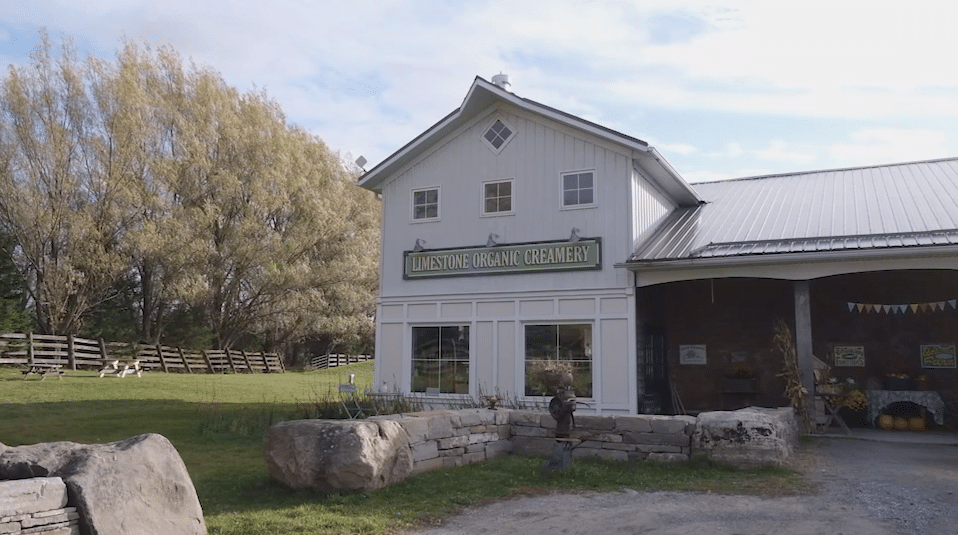
The Groenewegen family farms north of Kingston near Elginburg, and have been dairy farmers for decades. “When we started, one of the barriers to local food was distribution,” says Kathie, especially for dairy products. So Groenewegen family decided to create their own on-farm creamery and store; at the store they sell their own organic dairy products and baked goods along with food from 30 other local farms and processors. They also deliver directly into Kingston and the surrounding area.
Kathie farms with her husband Francis, and their two children, Olivia and Patrick. They have about eight mostly part-time staff who help with processing, and are always looking for more staff help.
Using organic milk from their own farm, the creamery produces many different dairy products, including milk (in various percentages), chocolate milk, cream (table cream and whipping), butter.
They recently started making ice cream from local dairy as well. “We’ll be making a lot more ice cream,” says Kathie. “It’s very popular.”
The Groenewegens milk twice a day every day, and process milk into dairy products twice a week. The processing takes a full day from six thirty in the morning to six at night.
Limestone Organic Creamery distributes all of their milk and cream in reusable glass bottles. Which means the first step of each processing day is to wash over three thousand glass bottles.
“We bought this humongous contraption from the States to wash bottles,” says Kathie. “It was built in 1967, and it will wash 2100 bottles an hour.”
“We’re still re-using bottles that we started with, it’s amazing,” Kathie remarks. “We really thought about it at the beginning – is this the right way to go environmentally?” They’ve been happy with the results, and find that the glass bottles helps milk to stay colder and have a longer shelf life.
Their dairy products are delivered both to stores and to doorsteps in the Kingston area.
The Groenewegen family takes an ecological approach to every aspect of farming. They set aside forested land for wild creatures, and let fields flower to encourage bees and other pollinators.
“We really feel that our land is healthier, and that our animals in turn are healthier,” because of organic methods, says Kathie.
The cows at Limestone Organic Creamery are grass-fed and rotationally grazed.
“We like having our animals out where they should be, in nature, in the sun and on the grass,” Kathie explains. “It makes the cows feel good, and the farmers. Cows just love it.”
They constantly work to maintain and improve the health of their farm ecology. “I really hope that people can see what can be done on a farm where you really put a lot into maintaining the biodiversity of it, regenerating the soil and the land.”
“I think that people already are realizing the importance of local food,” Kathie adds. “People are going to have to rely on the local food system more and more.”
That’s in part because of the biggest challenge they face: climate change. “The seasons are changing, the planting seasons are changing. We’re trying to adapt to that.”
Drought is a major concern, says Kathie. “When you have a crop failure, especially on an organic farm, it really does hurt. It’s expensive to buy feed in.”
But the family is taking the challenge seriously, and is optimistic about the future.
“We have two children who want to farm,” Kathie explains. “We’re lucky to be able to encourage the next generation to farm in organic agriculture.”
“We’re really taking climate change and the environment as our top priority,” says Kathie. “And trying to establish a farm that works with nature.”
A short trip: Because of the quota system in Ontario, the milk must be sent in an official truck when it is moved from the Groenewegen milking barn to their on-farm processing plant. “But the milk truck only travels about 1000 feet.”
Knowing the land: Kathie and Francis were both raised on farms in the area. “Growing older, we know how to work our land. It’s a natural thing for both of us. We feel so close to our cows and to the land.”
Farming in Frontenac: Living adjacent to Loughborough Lake is one thing that has kept Kathie and her family in Frontenac County. “We really love this area, the beauty of it, and the biodiversity.”
Where to get Limestone Organic Creamery products:
The Limestone Organic Creamery store is open 7 days a week at 3127 Sydenham Road, Elginburg.
Limestone Organic Creamery offers once-a-week delivery to your door; if you aren’t home, they’ll put the delivery an insulated box on your doorstep. You can set up deliveries for milk and other local grocery items at: www.limestonecreamery.ca
You can also find their products at 25 different stores in Kingston, Camden East, Perth, Sydenham, and Verona.
The Limestone Organic Creamery store is open 7 days a week at 3127 Sydenham Road, Elginburg.
Maple Ridge Farm
Regenerative agriculture at work
Story by Aric McBay Photos by Suzy Lamont
“We harness our animals’ superpowers on our farm,” says farmer Becky Williams, “by utilizing what they naturally love to do, to improve our land and produce delicious, nutrient-dense food.”
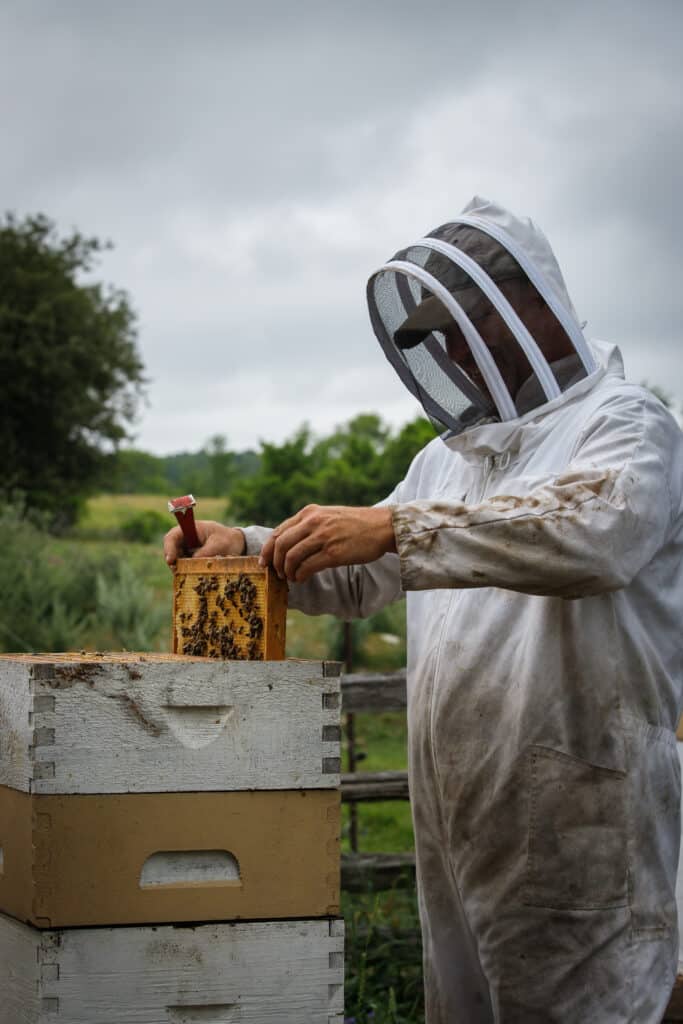
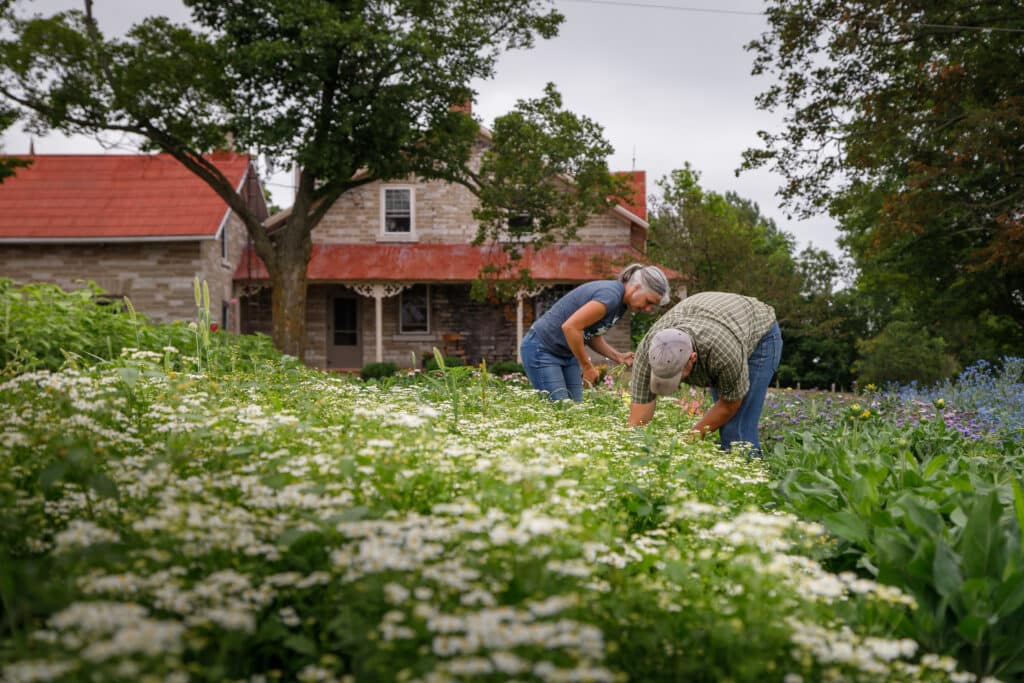
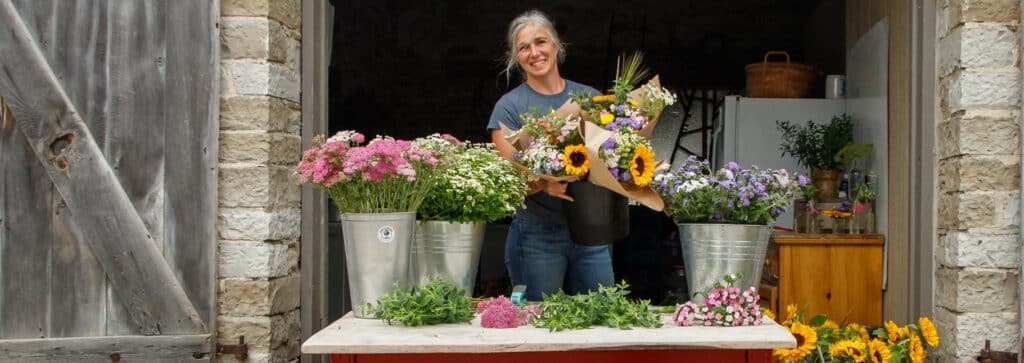
Becky runs Maple Ridge Farm along with her husband Mark McCrady and their sons Mitchell and Ben. They raise grass-finished Dexter Beef, pastured Berkshire pork, and pastured chickens for meat and eggs. They also keep honeybees and grow cut flowers.
“It’s a passion of our family,” says Becky. “It’s how we love to spend our time.”
Becky and Mark are both Queen’s graduates. In 2011, they moved from a smaller property to their current farm.
The larger farm at Maple Ridge provided new opportunities, but the land was tired from past overgrazing. Becky and Mark decided to raise ruminants (like cows) to help restore soil health.
On pasture, the animals can express all their natural behaviours, grazing to stimulate grass growth and adding manure to increase soil fertility.“We try to mimic nature as best we can,” explains Becky, through regenerative farming. “Cows love to be on the move and they love to be grazing. Pigs love to wallow and have their nose in the dirt. They are our built-in rototillers.”
“If your soil isn’t healthy, you’re not producing healthy plants,” Becky explains. “If we want nutrient-dense food, we need to go back to the health of the soil. Much of the food consumed today is grown on depleted soil, so the food is lacking those healthy vitamins and minerals.”
“Our goal is to grow the most nutritious, delicious food,” says Mark. “When you buy meat from us it’s good for you, it’s good for the animal, and it’s good for the environment.”
Maple Ridge Farm raises the Dexter breed of cattle, which are smaller than commercial breeds and do very well when exclusively grass-fed. “Dexters are amazing at turning forage into meat,” says Mark. “Their meat is sweet, naturally marbled and delicious.”
Growing food in a regenerative way has also allowed them to make a living on the farm. When they moved to Maple Ridge, Becky was working full-time off farm. But she decided that spending time at a desk behind a computer wasn’t what she wanted to do with her life. Mark works as a teacher with the Limestone District School Board.
Becky and Mark are grateful to the loyal customers who support their farm and see value in knowing where their food comes from. “Because of them our farm is sustainable. “Now we’re taking care of the people who support us.”
At Maple Ridge they believe in connecting with their customers. “The more people know about how their food is raised, the better.” Each week a farm update goes out with a candid recap of the happenings on the farm from the past week, along with recipes and product availability updates. You can sign up for the weekly update on their website.
Maple Ridge Farm offers home delivery of meat and flowers directly into Kingston, with a variety of pastured beef, pork, and chicken cuts as well as processed meats including beef jerky, pepperettes, kielbasa, sliced Black Forest ham and salami, chicken pot pies. They also offer bone broth and rendered fat in their online shop.
Customers can also order a “meat for the week” package that includes an assortment of dinner options with recipes.
“Feeding families is something that we’re most proud of,” says Becky. “And flowers!” she adds. “We love seeing how happy what we do makes people. You can’t help but get that same feeling.”
“People have become disconnected not only to where their food comes from, but also other farm products like flowers,” says Becky. “I think this is because we can get whatever we want any time. Especially on the flower end of things; many don’t realize how their buying choice impacts the environment or the working conditions.” Most imported flowers, Becky explains, are harvested by exploited workers who are exposed to dangerous pesticides.
For local flowers, in contrast, “the blooms are cut fresh in the morning and can be in a bouquet a few hours later.” Becky says: “Local flowers are hot right now. They are beautiful and have a long vase life so it’s not surprising that florists, consumers, and local shops are seeking out local flower growers.”
Patchwork Gardens
Story by Aric McBay
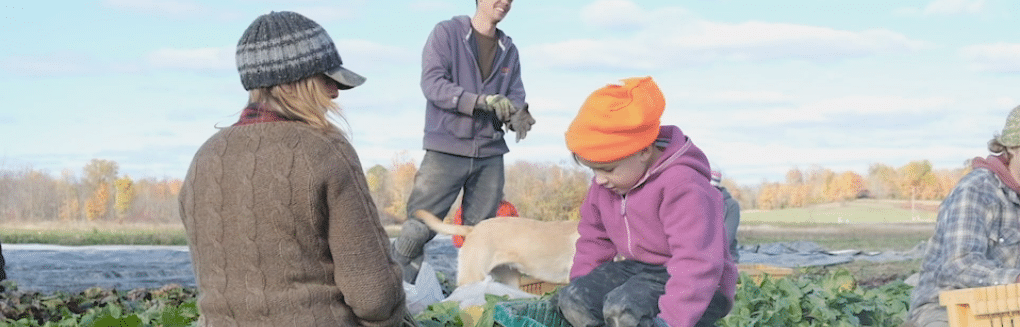
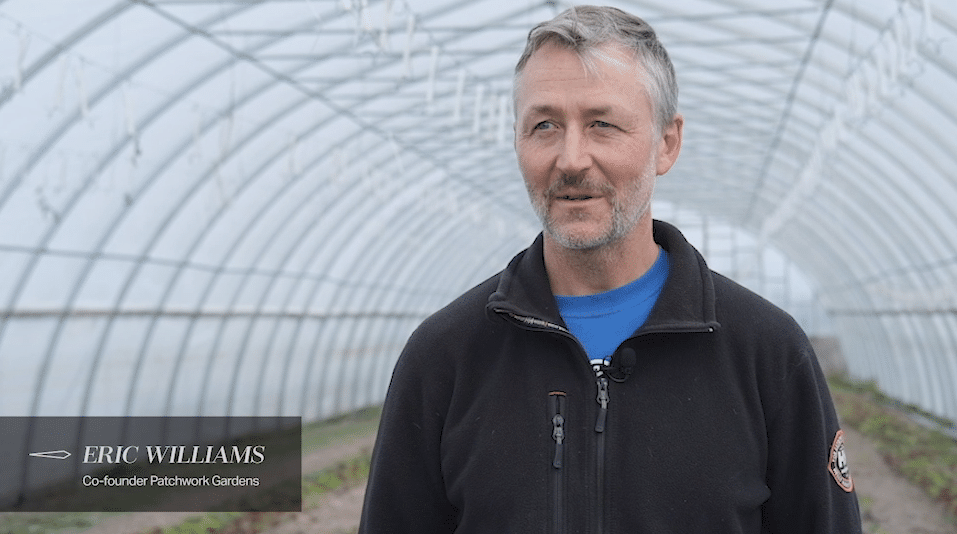
“Starting as a group is challenging, because everyone has their own idea of the way to go,” says Eric Williams of Patchwork Gardens. “Over time, you develop that shared vision. We’ve been pretty lucky, and we’ve worked really well together.”
Since its founding in 2004, Patchwork Gardens near Battersea has grown into one of the largest certified organic vegetable farms in our area. It emerged from a collaboration of three business partners: Eric Williams, Megan Joslin, and Ian Stutt.
The business partnership allowed them to pool resources and skills. It also meant that they could share the management and overcome some challenges of a farm built around a couple or a nuclear family.
“It’s tricky with a small family farm to take a break,” says Megan Joslin. “Having a small group spreads the workload.” The three business partners also have a mix of full- and part-time staff, employing six or seven additional people any given year.
None of the three Patchwork partners were raised on farms, but they all converged on agriculture as young adults.
“It’s an essential thing—everybody needs to eat,” says Megan. “I did a bunch of different things after university, and this is the only thing that really felt good at the end of the day.
“We’re really committed to producing high quality food,” Eric adds. “Organically grown in nutrient-dense soils. That originally was a reaction to large corporate food, and that’s what got me focused into agriculture.”
Ian Stutt explains: “It’s also about being a part of the overall community. That’s how we can contribute to it, is growing vegetables. It feels really good to play that role.
When they decided to buy their own farm, Frontenac County was a logical choice, says Ian. “Because of good water access, and the depth and quality of Battersea silt-loam soil.”
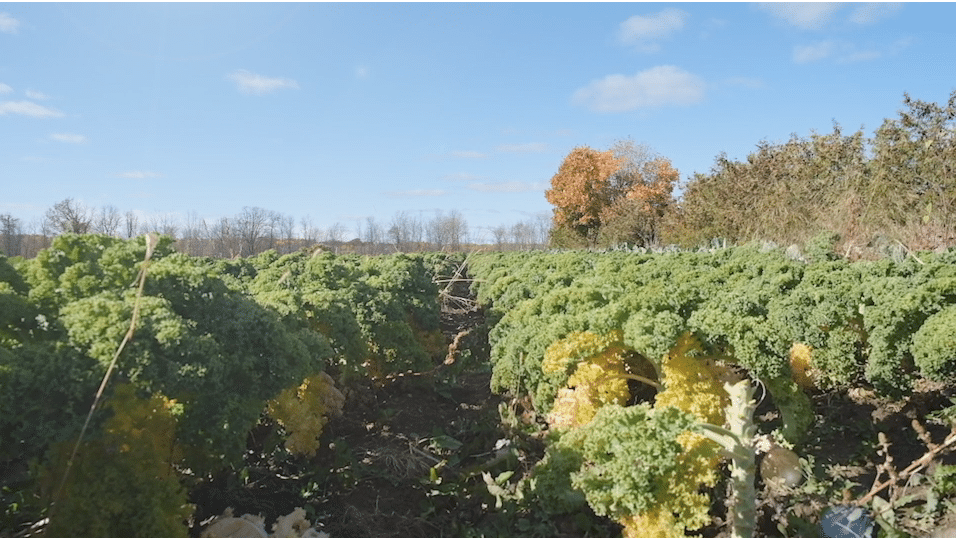
They’ve continued to build the fertility of that soil. In addition to a winter CSA, they now produce for many restaurants and independent grocers. “We grow a wide range of mixed vegetables,” says Ian. “Lots of seasonal greens and roots, and a lot of storage crops to carry through the colder months.”
The farm’s location near Kingston is also another reason they settled in Frontenac. “Other farms in Ontario are two hours from their markets,” says Ian. “Being close to Kingston is a huge deal for us, not just proximity to the market, but because of fun stuff going on in town! Restaurants, friends, hockey rinks and soccer fields.”
Those things are especially important now that the farmers have their own young children (Ian and Megan with each other, and Eric with his wife Julie).
“We work hard, but we also have a lot of fun,” adds Megan. “We don’t have staff on weekends. We try to have a good work-life balance.”
Balance is also part of the ecological approach on their farm. “We have a particular focus on soil and crop health,” says Ian.
They’ve planted 15,000 new trees on the farm in recent years, says Eric, and make space on the farm for nature. “Bobolinks, endangered rat snakes, turtles—we provide habitat for all those creatures.”
Sustainability, of all kinds, is important to Patchwork Gardens. “We’re in it for the long haul,” Ian explains. “We want this to be a long-term family farm, that’s here to be part of this community and region.
Minimal packaging: Patchwork is working to reduce waste in packaging. “We do package our products for retail,” says Megan, “but we’re trying at Tara Foods to allow people to buy in bulk and bring their own containers. We will do that anywhere! It’s the stores that need to accommodate customer habits.”
Climate change: Global warming is stressful for the farmers at Patchwork. As Ian says, it means “the uncertainty of everything, whether you are planning a year, or five, or twenty years. The idea that we could struggle all the time is daunting.”
Where to get Patchwork Gardens products:
Patchwork Gardens also offers a winter CSA with a monthly box of seasonal vegetables from November to February; you can sign up at their website at www.patchworkgardens.ca.
Patchwork Gardens vegetables can be found at many different restaurants and local independent grocers including Glenburnie Grocery and Tara Natural Foods. For a up-to-date information, visit them on Instagram via @patchworkgardens_kingston and on Facebook. They also offer bags of pre-sliced coleslaw vegetables.
Patchwork Gardens also offers a winter CSA with a monthly box of seasonal vegetables from November to February; you can sign up at their website at www.patchworkgardens.ca.
The Rise Farm
The Rise Farm Story
Story by Aric McBay
“This is what we have chosen and want to do, and how we want to spend the rest of our lives,” says Sarah Winney. “We truly believe that everyone has a responsibility to the Earth. This is a way that we feel we are doing our part, and getting more satisfaction from it than we were in our previous lives.”
Sarah and Rob Winney run The Rise Farm in Central Frontenac near Godfrey. They raise pigs, sheep, goats, chickens, rabbits, and ducks. “We have just under 23 acres,” says Sarah. “We have a lot of grassy waterways, ponds, and rock.”
Farm life has been a big change for Sarah and Rob, and they are still fairly new to it.
“We moved from Toronto,” explains Sarah. “We had both worked office jobs, and started becoming more conscientious about where our food came from. We wanted to diversify what we were eating, and we wanted to do it as responsibly as possible.”
Their farm in Frontenac is located between family in Toronto and Ottawa. “We originally bought the property as a destination and thought ‘oh we’ll do some camping,’” recalls Sarah. “Every weekend it got harder to leave.”
They moved to the farm permanently in April 2018. “Our ten-year plan went to a five-year plan, to a six-month plan, to ‘we’re here!’” laughs Sarah.
“We spent the first year just learning the land, where we could put chickens and pigs, where we could rotationally graze,” says Sarah. It was important to Rob and Sarah to really understand the ecology and the limits of their rocky farm. “Everyone wants beef, but at this point our land couldn’t sustain cows so we decided to raise sheep and goats instead.”
As they settled in, they took part in every farming workshop they could find. They also signed up for the Frontenac Ambassador program, and are grateful for support from staff at the County of Frontenac. “That’s been really pivotal for us,” Sarah says. “It’s been really nice to be welcomed in the community. The County has been really helpful in embracing us as new farmers.”
As they enter their third season, they want to make sure to keep things manageable. “Our biggest challenge right now is to not go too big,” Sarah explains. “It’s hard with farming because you only have one chance per year.”
“Everything is raised by us, and we are 100% hands-on from bottle-feeding to making sure every chick has enough food. We do it all ourselves.”
Animal welfare is their top priority. “We really care about our animals, about ensuring they have the best lives with the most sustainable impact on the environment.” Sarah says their customers share those values. “We believe that people care about where their food comes from. We’re always excited to talk to our customers about how we raise our animals, and how things work to get food from the farm to your table.”
Their online store includes staples like chicken, eggs and pork, but also unique options like goat, duck, and rabbit (whole, ground, and pepperettes!).
Sarah and Rob have a plan to scale up production in the years to come. “We’d like to see continued growth, and to grow our local community base,” says Sarah. This year they plan to start making value-added products like hot sauce and pasta sauce.
“Eventually we would like to have an on-farm store with an inventory of products where customers could come and purchase whatever they’d like, and see the farm,” Sarah concludes. “Feeding our friends and family is the reason we will continue doing this as long as we can.”
Where to get The Rise Farm products:
You can order pork, lamb, chicken, goat, rabbit, and duck from The Rise Farm website at: therisefarm.com
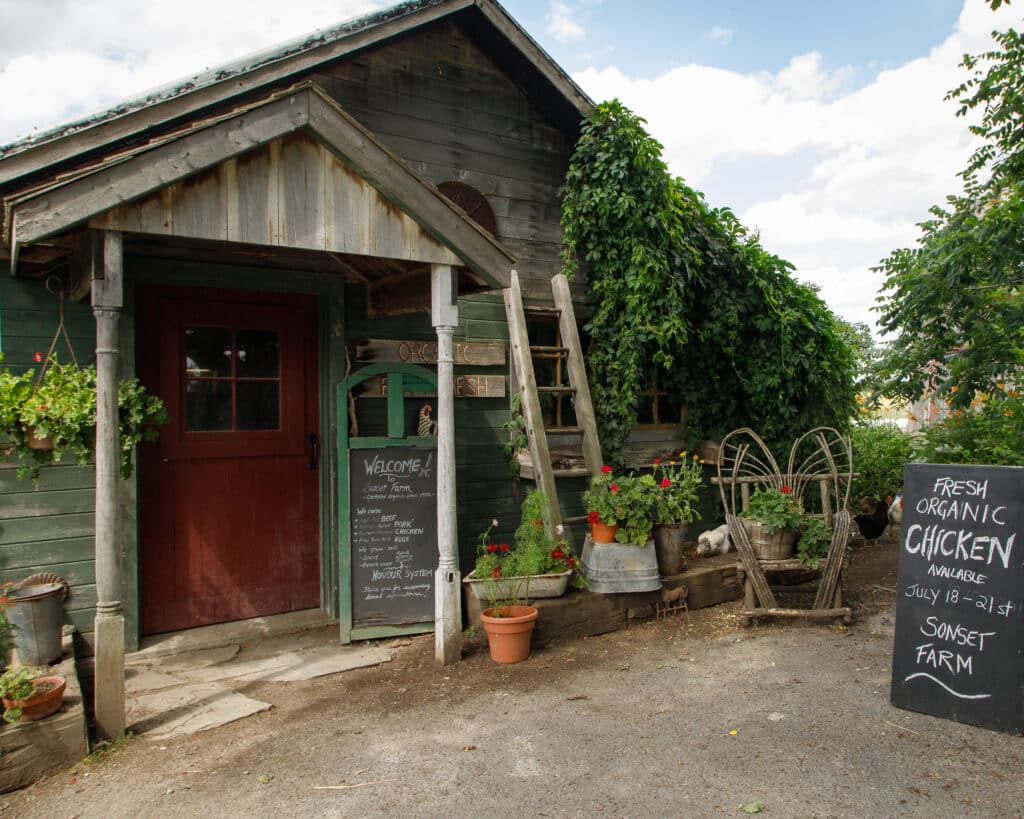
“We don’t inherit the land from our parents,” reads the label on Sonset Farm flour, “we borrow it from our children.”
That’s the ethic at the heart of Sonset Farm, an organic family farm just west of Inverary, in South Frontenac.
“When people come here, we encourage them to bring their kids, or their grandkids, and go out to collect the eggs,” says farmer Andrea Cumpson. “To feel that warm egg in their hand. We want them to experience what the land has to give.”
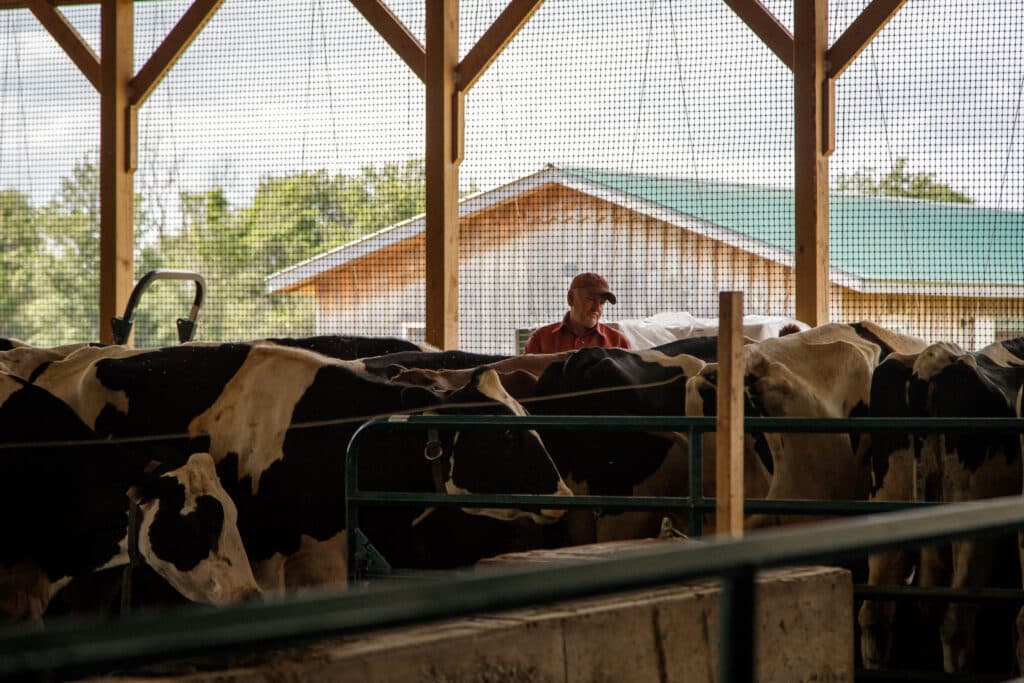
Along with her family, Andrea raises dairy cows, pastured pigs and chickens, grass-fed beef, and grows spelt on their diversified family farm.
“More and more people are coming and having respect – almost reverence – for quality food and the land,” Andrea observes. “I think people are really coming back to that, compared with even ten years ago. It’s amazing the people who want to see farming viable, alive, and well.”
Andrea farms at Sonset with her husband Orrie (who grew up on the picturesque farm). Their son Charlie was also raised on the farm, and married Hailey; they recently welcomed baby Nathan, now the fourth generation at Sonset.
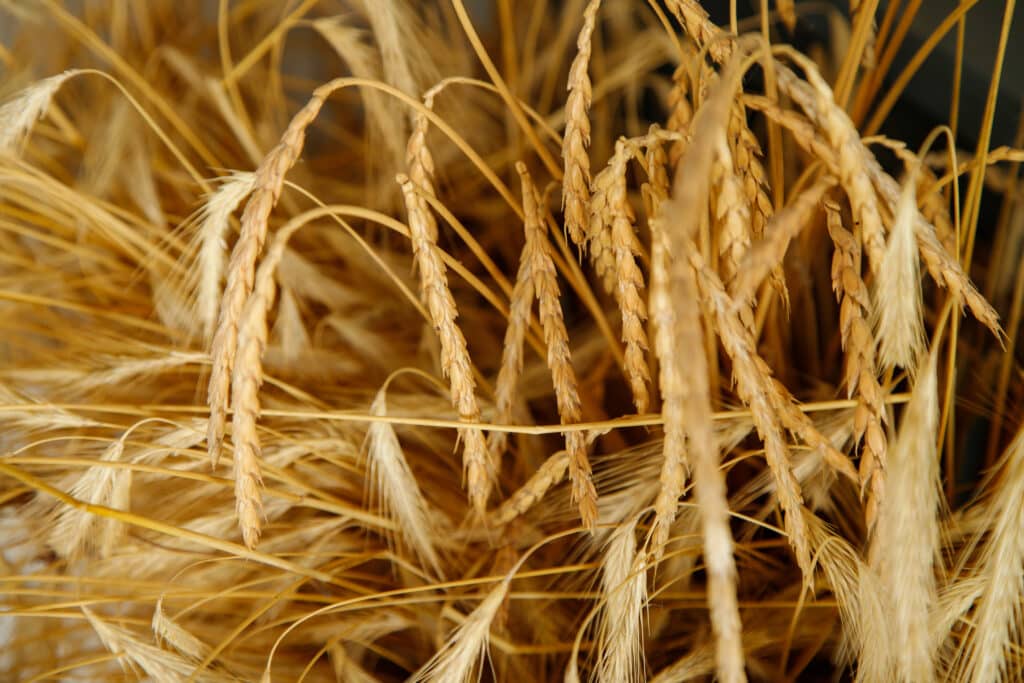
A major crop is spelt, an ancient grain that is well-suited to organic cultivation. Sonset farmers grind the spelt into flour on their farm and also roll it into flakes (which can be used just like oat flakes in bread, cereal, or baked goods). Sonset Farm sells their own fresh spelt pasta, which is made in Kingston by Pasta Genova, using Sonset spelt flour and organic eggs from Reinink Family Farms.
That spelt pasta – along with meats and other products – can be bought at their on-farm store. “Our farm store is based on the honor system,” Andrea explains. “We want our community to feel part of this farm.”
“We only sell what we raise and grow,” adds Andrea. “I think that’s really important, so we can tell the entire story.”
The ecological growing methods at Sonset are a big part of that story, and for Andrea that means attention and deep care for the land. “The animals and the land can teach us a lot,” she says. “The interconnection of all living things, I’m in awe over it every day.”
Development pressure is a big problem for species at risk, says Andrea, causing loss of farmland and wildlife habitat. But organic farming can help protect them: “It feels like our farm is a refuge for some of these species, like bobolinks and barn swallows. There are so many of them! It just feels alive.”
The farm was one of the first in the area to become organic. “It was challenging at the beginning,” says Andrea. “Now there is so much out there about regenerative agriculture and organic agriculture. But when we first started it was really difficult to find that information.”
But with support from other farmers in Frontenac County and Ontario, they learned. Starting in the 1980s, the Cumpson family took ecological agriculture courses and shared knowledge through kitchen table meetings.
“There was such a supportive network of farmers, sharing their struggles and the good things that were happening,” recounts Andrea. “Everyone wanted to see everyone else succeed.”
They are proud members of the National Farmers Union. Andrea says: “A strong farming community is so important for learning and for our farm’s success.”
Farming in Frontenac County was a decision Andrea has been very happy about, and she hopes that her family will keep farming here for generations to come.
“When you’re farming with nature, you see the vibrancy and health of the land and your animals,” says Andrea. “Especially here, in South Frontenac, with the lakes and streams, the rocks and the trees, and the biodiversity.”
“It’s why we can succeed in farming organically.”
Where to find Sonset Farm products:
Sonset Farm’s organic milk and dairy products (including butter, cheese, and sour cream) can be bought through the Organic Meadow brand at many grocery stores.